
Get Clear Answers with a Comprehensive Autism & Developmental Evaluation
Get clear answers with a comprehensive evaluation from a licensed clinical psychologist—so you can understand your child and know exactly what to do next. If you’re concerned about your child’s development, our licensed clinicians provide accurate diagnoses and clear next steps—without long waitlists.
Noticing Something Different About Your Child?
We Can Help with a Clear Diagnosis. A Real Plan. Peace of Mind.
You may be seeing signs that your child is developing differently—but aren’t sure what they mean.
You’re not alone. Many parents come to us feeling uncertain and looking for answers.
An evaluation can provide clarity, direction, and peace of mind.
Our comprehensive psychological evaluations provide:
Why Families Choose Blue Bird Day
The 4-Step Process to Answers
Our supportive process ensures that we get to know your child and family through a comprehensive assessment that includes parent/caregiver and school interviews, onsite observations, and standardized testing.
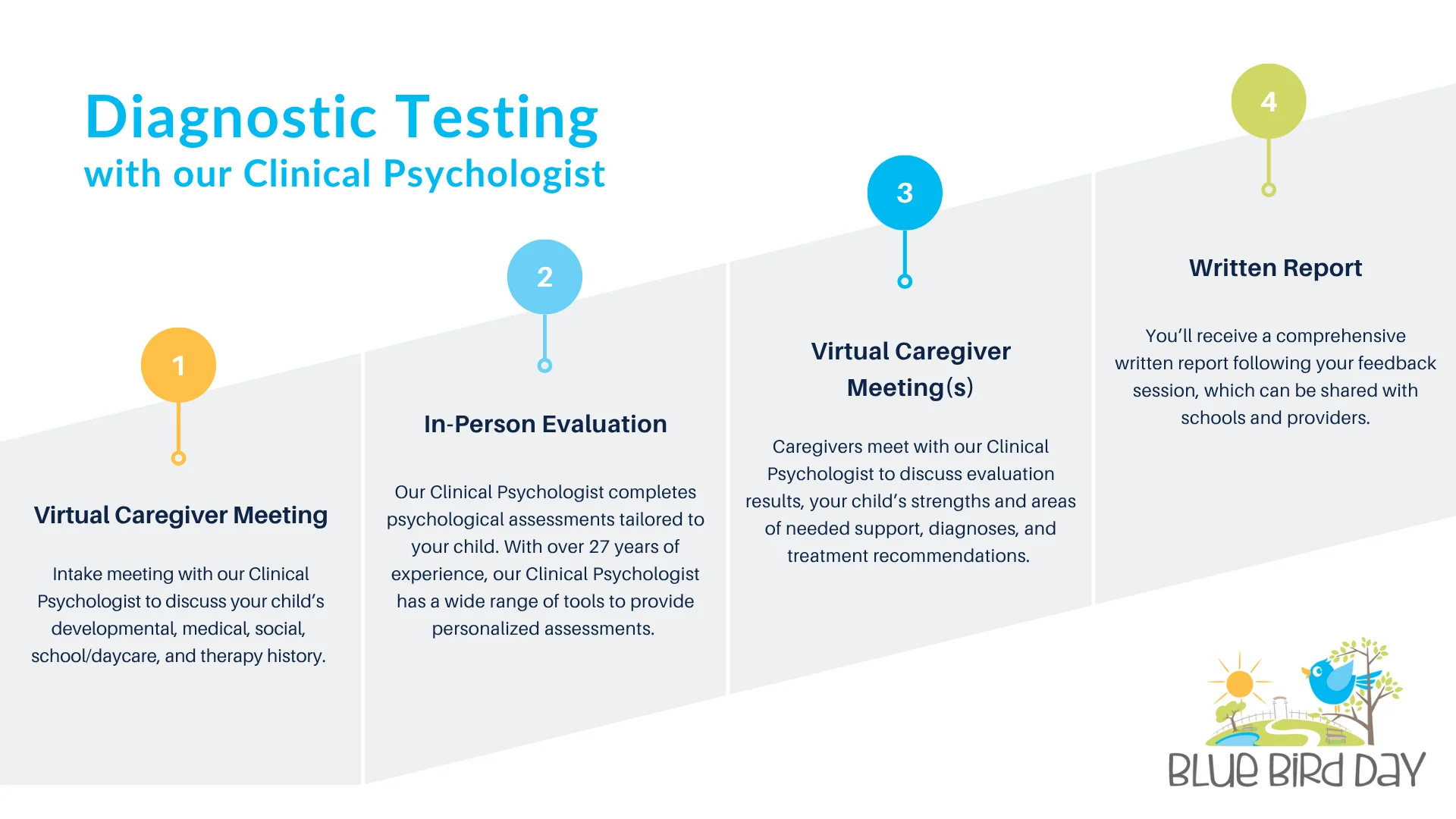
Learn More About Each Step:
Our evaluation process is designed to be thorough, supportive, and tailored to your child.
1. Virtual Intake Appointment
We begin with a virtual meeting with our Clinical Psychologist to understand your concerns, your child’s symptoms, and your goals for testing. We’ll also gather important background information, including developmental history, medical needs, education, and social experiences.
Parent & Teacher Input
Parents will complete questionnaires about their child’s behaviors and development. If your child is in school, we may also request input from teachers or other caregivers. This helps us understand how your child is functioning across different environments.
2. In-Person Testing
Your child will participate in a one-on-one testing session, typically lasting 2–3 hours.
This session includes a mix of structured and play-based activities—such as answering questions, solving puzzles, and interactive “brain games”—designed to assess skills, behaviors, and areas of concern. We include breaks to keep your child comfortable and engaged.
All assessments are psychological in nature. We do not perform medical tests or prescribe medication.
3. Virtual Feedback Meeting
After testing is complete, we’ll meet with you virtually to review the results. We’ll explain any diagnoses, discuss your child’s strengths and needs, and walk you through personalized recommendations for therapy, school supports, and next steps.
If medication may be helpful, we can collaborate with your child’s pediatrician to explore options.
4. Written Report & Ongoing Support
You’ll receive a comprehensive written report following your feedback session, which can be shared with schools and providers.
We’re here beyond the evaluation—if questions come up later, you’re always welcome to reach out or schedule a follow-up consultation.


Goals of Diagnostic Testing and Assessment
At Blue Bird Day, our goal is to help families better understand their child—so you can feel confident in how to support their growth.
Through comprehensive psychological evaluations, we provide more than just a diagnosis. We identify your child’s strengths, challenges, and unique needs, along with clear recommendations for therapy, school, and daily life.
Many families come to us looking for answers to questions like:
-
What’s going on with my child?
-
How can I support them at home or in school?
-
Do they need accommodations or additional services?
Our team provides practical, personalized recommendations that can be used at home, in school, and in other settings. We can also help guide you in accessing supports such as IEPs or 504 plans and collaborate with schools when needed.
For children with existing medical conditions (such as Down syndrome, seizure disorders, or other health concerns), our evaluations help clarify developmental progress, adaptive skills, and emotional or behavioral needs—so you can better understand how to support your child moving forward.
Areas we May Focus our Evaluation
Do I Really Need Diagnostic Testing and Assessment for my Child?
It’s completely normal to feel unsure about whether your child needs formal testing.
Many parents notice challenges like anxiety, trouble focusing, communication difficulties, or frustration at school—but aren’t sure what to do next. You may be wondering:
-
Is this something they’ll grow out of?
-
Will a diagnosis label my child?
-
Is testing really necessary?
These are valid concerns. Wanting to help your child while also protecting their future can feel overwhelming.
A diagnosis isn’t about labeling your child—it’s about understanding them.
A comprehensive evaluation can:
While schools and insurance providers determine eligibility for services, a detailed evaluation gives the documentation and recommendations needed to advocate for your child.
For many children (and parents), having answers can be a turning point.
