For many families in Chicago, when early intervention therapy comes to an end for their neurodiverse child, they face a new question with real weight behind it: what comes next? And the next stage is critical.
The support you choose will shape your child’s future and build the foundation for communication, learning, and social growth.
For children on the autism spectrum or who have other developmental differences, the transition from early intervention is more than a schedule change. It’s a dramatic shift in setting, expectations, and coordinated support.
Some children do well in a traditional preschool with school based services. Others benefit from ABA therapy. Some need a more complete model that brings education and therapy together in one place.
This guide walks through the main choices parents face after early intervention, what families often gain from each, and why a therapeutic preschool like Blue Bird Day may be the right fit for families in West Loop, Northcenter, or Wheaton.
If you would like more personalized insights, please contact us today! We’re here to support you every step of the way.
Why the Transition Matters
Here’s the key point: the end of aged based early intervention is not the end of support needs.
Early intervention is designed to help infants and toddlers build important early skills. Once a child ages out, families often move into a very different system. Services may become less frequent, harder to coordinate, or tied to school eligibility rules that do not always match the full picture of a child’s needs.
That gap can affect progress in areas such as:
- Communication
- Social interaction
- Emotional regulation
- Play skills
- Motor development
- Feeding and self help routines
- Readiness for a school setting
For many parents, this is also the point where care becomes more fragmented. One provider may address speech. Another may focus on behavior. A school team may work on classroom goals.
However, children don’t develop in separate categories. Skills grow together, and support often works best when the people helping your child are working as one team.
Common Options
Most families looking at next steps after early intervention therapy in Chicago are choosing between two common routes: traditional preschool with IEP supports or ABA therapy. Both can help. However, they aren’t built the same way, and each has limits that parents should weigh carefully.
Option 1: Traditional Preschool with IEP Supports
A traditional preschool can offer valuable early learning experiences. Children spend time with peers, follow routines, join play based activities, and begin to build independence in a group setting. For some children, that environment is enough, especially when needs are mild and support can be added through an Individualized Education Program, or IEP.
What a Traditional Preschool May Offer
- Peer interaction
- Early academics
- Group routines
- Play based learning
- Exposure to a school like setting
Those are meaningful benefits. Children can practice turn taking, listening, transitions, and classroom participation in ways that feel natural and age appropriate.
Where Traditional Preschool May Fall Short
Here is the part families need to look at closely: school based support is tied to eligibility and service limits.
An IEP can provide therapy and accommodations, yet services are often delivered in shorter blocks and may not cover all of the areas your child needs. A child may receive some speech therapy or occupational therapy through the school system, however the amount and intensity can be limited. In many cases, support is designed to help a child access the classroom, not to provide broad, daily therapeutic care.
For children with autism who still need help with language, sensory regulation, social communication, behavior, motor planning, or self help skills, a traditional preschool may not be enough on its own.
Option 2: ABA Therapy
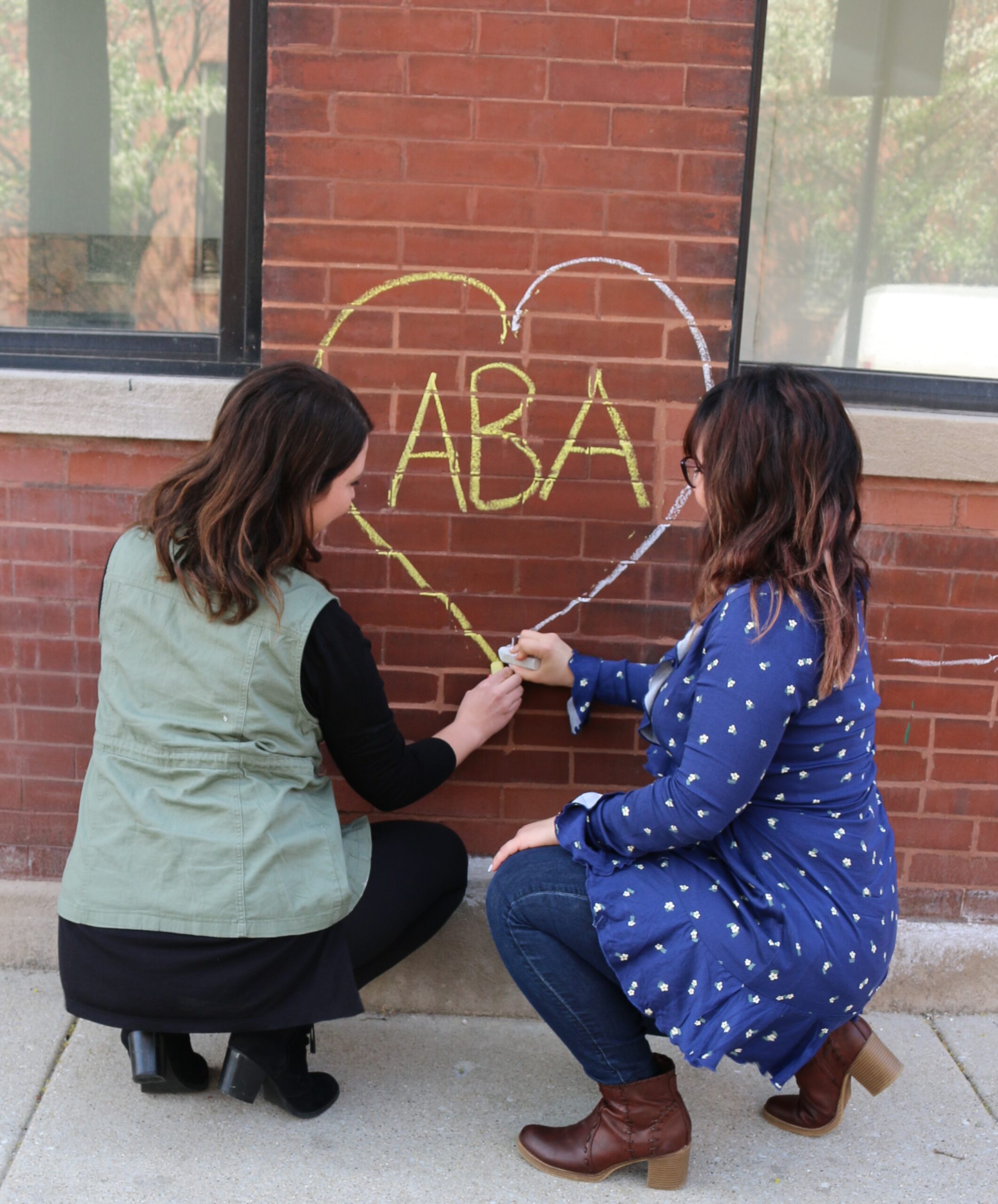
ABA therapy is another common next step. Applied Behavior Analysis, or ABA therapy, uses structured teaching to help children learn skills step by step. It’s often used to support communication, daily living, behavior, attention, and learning readiness.
For many children, ABA therapy is highly effective, especially when goals are clearly defined and treatment is individualized.
What ABA Therapy Does Well
- Learning new routines
- Building communication skills
- Reducing unsafe behaviors
- Increasing attention and participation
- Teaching self-help skills
- Strengthening readiness for school and home tasks
One of the strongest features of ABA therapy is that it can be customized. A treatment plan can target specific goals based on your child’s needs, and progress is often tracked closely over time.
Where ABA Therapy May Have Limits
However, ABA therapy is usually delivered one to one. That can be helpful for focused instruction, yet it may reduce natural peer interaction during the day. Some children need more chances to practice social skills with other children in real time, not only with adults.
Families should also ask an important question: who is addressing the full range of development?
ABA therapy may focus heavily on behavior and learning goals. However, children with autism often benefit from additional support in speech, occupational therapy, physical therapy, feeding, and social emotional growth. If those services are added separately, families may end up managing several providers across different locations and schedules.
That’s one reason many parents begin looking for a therapeutic preschool that combines therapies within a school like day.
Option 3: Multiple Therapies
Why Some Children Need More Than One Model
This is where the comparison becomes clearer. Traditional preschool offers peer learning and classroom experience. ABA therapy offers structured skill teaching. However, many children need both developmental support and educational structure, along with access to multiple therapy disciplines.
A blended model can be especially helpful when a child:
- Has aged out of early intervention and still needs daily support
- Needs speech, occupational, physical, or feeding therapy
- Benefits from routine and structure
- Needs help with social emotional development
- Is not yet ready for a less supported preschool environment
- Needs more peer interaction than a one to one model usually provides
For these children, the question is not whether preschool or therapy matters more. The better question is how to bring both together in a way that feels consistent, purposeful, and child centered.
Blue Bird Day is Built for This Stage
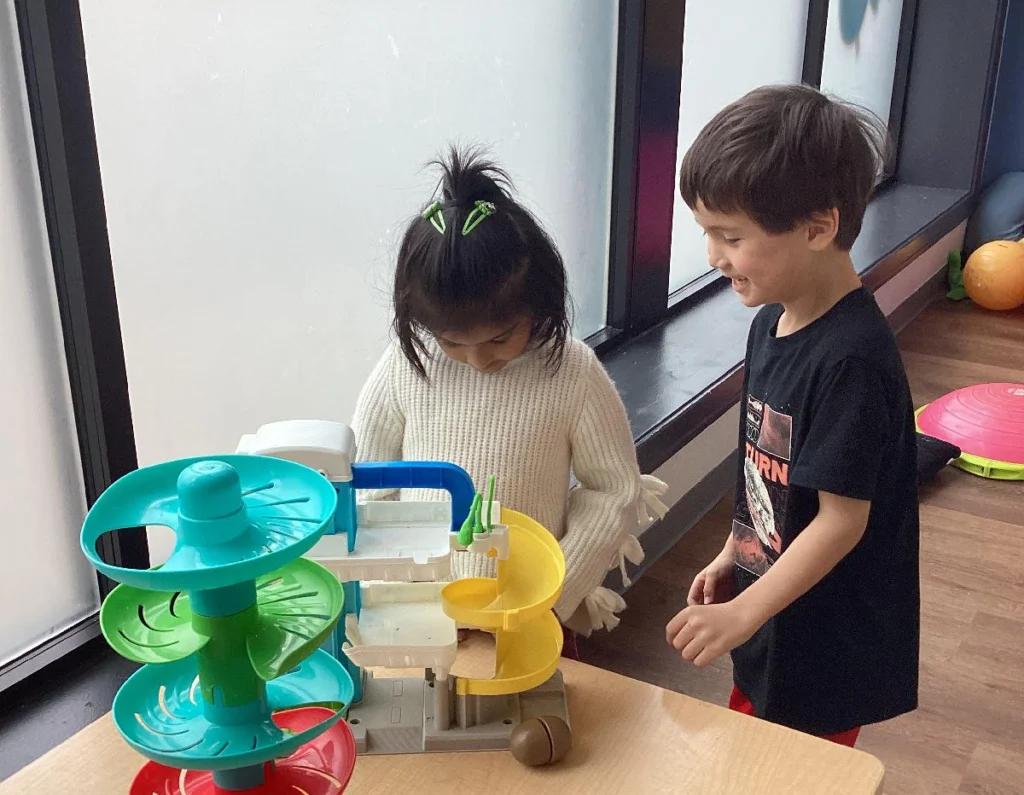
Blue Bird Day was created for children who have aged out of early intervention and still need strong developmental support. It’s a therapeutic preschool and kindergarten program that blends education and therapy across the school day.
Rather than placing services in separate silos, the program uses a multidisciplinary model where professionals work together to support each child’s progress in a setting that feels both nurturing and structured.
The Blue Bird Way
Blue Bird Day stands out because it does not ask families to choose between school readiness and therapeutic care. It brings them together.
The program includes a multidisciplinary team that may involve:
- Behavior therapists
- Occupational therapists
- Speech language pathologists
- Physical therapists
- Developmental therapists
- Social workers
- Feeding therapy
That matters because children need to grow in more than one area at a time. A child working on communication may also need sensory support. A child building classroom skills may also need help with feeding, gross motor development, or emotional regulation.
When one team collaborates across those needs, care becomes more connected and practical. Everyone is working on the same goal of developing the whole child.
Supporting Real Life Growth
A therapeutic preschool is not simply preschool plus therapy hours added on. The value comes from how support is built into the day.
At Blue Bird Day, therapeutic and educational strategies are used to help children build skills such as:
- Independence in daily routines
- Social interaction with peers
- Sensory regulation
- Communication
- Play and learning readiness
- Emotional development
- School participation skills
This kind of model gives children repeated chances to practice skills in context. Instead of learning one skill in a clinic room and trying to carry it over later, children can use it during transitions, peer play, meals, movement activities, and teacher led tasks.
The repetition and coordination makes a meaningful difference.
Verifiable differences
When comparing options, it helps to stay grounded in what each setting is designed to do.
Traditional Preschool with IEP Supports
- Built for early education in a group setting
- Services depend on school eligibility and available resources
- Often offers less therapy intensity than private or integrated programs
- Peer interaction is built in
ABA Therapy
- Built for structured, individualized skill instruction
- Commonly delivered one to one
- Often tracks behavior and goal progress closely
- May require separate providers for speech, occupational, or physical therapy
Therapeutic Preschool
- Built to combine daily learning and therapy
- Offers access to peers and structured routines
- Can include multiple therapy disciplines under one program
- Supports readiness for future school environments while addressing ongoing developmental needs
These are not claims of one size fits all success. They are functional differences in program design. For many families, those differences become the deciding factor.

When to Consider a Therapeutic Preschool
If you aren’t sure what setting fits best, look at what your child needs across a full day, not only in one session.
A therapeutic preschool may be worth serious consideration if your child:
- Still needs frequent support after early intervention
- Has autism and benefits from both structure and social learning
- Needs help across more than one area of development
- Has outgrown home based services but is not fully ready for a standard preschool setting
- Does better when therapy is integrated into routines
- Needs a team based plan instead of separate appointments across the week
For many Chicago families, that middle ground is exactly what has been missing.
What Parents Want Most at This Stage
By this point, most parents are not looking for promises.
They are looking for fit.
They want a place where their child is seen clearly.
They want support that reflects real needs, not only a checklist.
They want professionals who can explain why a plan makes sense and how progress will be measured.
They want a setting that builds skills for the next chapter, whether that means kindergarten, a less restrictive classroom, or greater ease in daily family life.
That is why integrated care matters. It reduces fragmentation. It creates consistency. It helps children practice skills across the day with support from professionals who are working toward shared goals.
Blue Bird Day therapeutic preschool and kindergarten in Chicago checks all the boxes.
If your child has aged out of early intervention and still needs consistent, individualized care, your next step is to look closely at settings that combine therapy and education in one place.
A strong fit now can help your child build skills with more confidence, more continuity, and more room to grow.
If you would like more personalized insights, contact us today! We’re here to support you every step of the way.
Frequently Asked Questions
Is Blue Bird Day covered by insurance or early intervention funding?
Blue Bird Day accepts many private insurance plans. Our team will help you review coverage and payment options so you can focus on your child’s progress.
Can my child still receive individual therapies while enrolled at Blue Bird Day?
Yes, your child’s speech, occupational, physical, and behavioral therapies will all be integrated into their daily routine at Blue Bird Day, so support is consistent and team-based within the same nurturing program.
How do I know if my child is ready for a therapeutic preschool like Blue Bird Day? If your child has finished early intervention and still needs daily support for communication, behavior, or learning—especially in more than one area—a therapeutic preschool in Chicago like Blue Bird Day may be the right next step.

Blue Bird Day—the first therapeutic preschool and kindergarten program in the nation—fosters socialization, sensory regulation, and pre-academic learning in children ages 2-6 years. Our compassionate therapists practice a relationship-based and family-centered approach, provide parent training, and collaborate on goals and individualized intensive treatment plans for your child.
We believe in a collaborative and multi-disciplinary team approach to therapy. A team of occupational therapists, speech-language pathologists, dietitians, developmental therapists, behavioral therapists, physical therapists, and therapeutic assistants are created for each child to ensure child and family are fully supported and the best possible results are achieved.
Options for individualized, group and virtual therapy sessions are available as well.
Want to learn more or you have a specific question? Feel free to connect with us here!