You just left the specialist’s office with your child’s diagnosis, your head spinning with words like “proprioception,” “neurodivergent,” and “sensory processing disorder.” You have no idea what half of it means. And now you’re Googling at 2 AM, drowning in medical jargon that reads like it was written for doctors, not parents.
Here’s the truth: All that alphabet soup—the IEPs, ABA, OT, and every other acronym they threw at you—doesn’t have to feel like a foreign language. This guide will give you a foundation. While we can’t cover every single term or situation, we have included the most important vocabulary words and concepts to get you started.
This is your toolkit for securing what your child truly needs, and a bridge through schools, therapies, and support systems. Ready to speak the language fluently?
The First Words You Will Hear
Autism Spectrum Disorder
Most clinicians use the formal term Autism Spectrum Disorder, often shortened to ASD. The word “spectrum” matters here. It means autism looks different in every child. One child might speak in full sentences but struggle to make friends. Another might be nonverbal but understand everything said around them. Some children need help with every daily task. Others need support only in specific situations.
The spectrum is not a line from mild to severe. Think of it more like a color wheel. Each child has their own unique combination of strengths and challenges.
Support Levels
Professionals sometimes describe three levels of support needs. Level 1 means a child needs some support. Level 2 indicates substantial support is required. Level 3 means very substantial support is necessary. These levels help teams decide what services a child might benefit from, but they do not define everything about that child.
Parents should know these levels can change over time. A child might need more support during stressful transitions and less support when routines are stable.
Neurodiversity
This word represents a shift in how people think about autism. Instead of viewing autism as something broken that needs fixing, neurodiversity treats it as a natural variation in how human brains work. Just as biodiversity makes ecosystems stronger, neurodiversity suggests that different kinds of minds make communities richer.
Some families embrace this perspective immediately. Others take time to adjust their thinking. Both responses are valid.
Person-First vs. Identity-First Language
This debate confuses many parents. Person-first language puts the person before the condition: “child with autism.” The idea is to emphasize the child’s humanity first. Identity-first language flips this: “autistic child.” Many autistic adults prefer identity-first language because they view autism as an integral part of who they are, not an accessory they carry.
The best approach? Ask. When talking about your own child, use whatever feels right to your family. When talking about others, respect their preference.
Developmental Delays
This phrase means a child is reaching milestones later than typical age ranges suggest they should. A child might walk at 18 months instead of 12, or speak their first words at three instead of one. Delays do not necessarily predict future ability. Many children catch up in certain areas. Others develop their own timeline that works perfectly well for them.
Social Communication Challenges
Clinicians use this phrase to describe differences in how a child interacts with others. This might include limited eye contact, difficulty taking turns in conversation, trouble reading facial expressions, or challenges understanding jokes and sarcasm. These are differences, not deficits. Many autistic people communicate effectively in ways that do not match typical expectations.
Restricted Interests
This term describes when a child focuses intensely on specific topics. One child might memorize every dinosaur species. Another might spend hours lining up toy cars. Clinicians sometimes view these interests as problematic, but many autistic adults describe them as sources of joy and expertise. These deep interests often become career paths or lifelong passions.
Repetitive Behaviors
Hand-flapping, rocking, spinning, or arranging objects in patterns all fall under this category. Professionals track these behaviors during diagnosis, but families should know they often serve important purposes. They might help a child manage sensory input, express excitement, or self-soothe during stress.
Co-Occurring Conditions
Many autistic children also have other diagnoses. ADHD appears frequently alongside autism. Anxiety disorders are common. Some children have sensory processing differences, sleep disorders, or gastrointestinal issues. Each co-occurring condition adds another layer to understand, but also opens doors to additional helpful supports.
Assessment Tools
ADOS-2
The Autism Diagnostic Observation Schedule sounds intimidating, but it is essentially structured playtime. A trained clinician presents activities designed to observe how a child communicates and interacts. They might blow bubbles to see if the child shares attention, or set up a pretend birthday party to observe imaginative play. The assessment takes one to two hours and provides standardized information about autism traits.
ADI-R
The Autism Diagnostic Interview-Revised is a long conversation between a clinician and parents. Questions cover developmental history, current behaviors, and family observations. This interview can take two to three hours. Parents often find it emotionally exhausting because it requires recounting challenges in detail. However, parent insight is invaluable. Families know their child in ways no clinician can observe in a single appointment.
CARS-2
The Childhood Autism Rating Scale asks clinicians to rate the presence and severity of autism characteristics across different areas. Scores help determine where a child falls on the spectrum and what intensity of support might help.
School Related Terms
IEP
The Individualized Education Program is a legal document that outlines exactly what support a child receives at school. It includes specific, measurable goals, describes services like speech or occupational therapy, and lists accommodations the child needs. Parents are equal members of the IEP team. Schools must hold annual meetings to review progress and update the plan.
Parents should know they can request an IEP meeting at any time if something is not working. They can bring advocates or friends for support. They can disagree with school proposals. The IEP is a living document, not a set-in-stone decree.
504 Plan
Section 504 of the Rehabilitation Act requires schools to provide accommodations for students with disabilities, even if they do not need special education services. A 504 Plan might include extra time on tests, preferential seating, or breaks during the day. It is less comprehensive than an IEP but still legally binding.
Functional Behavior Assessment
When a child’s behavior interferes with learning, schools conduct this assessment to figure out why the behavior happens. What triggers it? What purpose does it serve? What happens right before and right after? Understanding function allows teams to teach replacement behaviors that meet the same need in more appropriate ways.
Assistive Technology
This broad term covers any device that helps a child communicate. It might mean a simple picture board, a speech-generating device, noise-canceling headphones, or specialized software that reads text aloud. Schools must consider assistive technology for every child with an IEP.
Transition Planning
By age 16, or younger in some states, schools must begin planning for life after high school. What does the student want to do? What skills do they need to develop? How will they access job training, college, or community programs? Transition planning should be individualized and meaningful, not a box-checking exercise.
Therapies
Applied Behavior Analysis
ABA is probably the most discussed and debated autism therapy. It uses principles of learning and motivation to teach new skills and reduce behaviors that interfere with daily life. High-quality ABA is individualized and focuses on meaningful goals families choose.
Many autistic adults criticize traditional ABA for trying to make autistic children appear “normal” rather than supporting their authentic selves. Modern ABA practitioners are increasingly incorporating neurodiversity-affirming practices, but families should ask detailed questions about philosophy and methods before starting services.
Speech Therapy
Speech-language pathologists work on much more than just talking. They address understanding language, using language to communicate wants and needs, social communication skills, and alternative communication methods for nonspeaking children. Speech therapy might look like play, conversation, or structured activities depending on the child’s age and goals.
Occupational Therapy
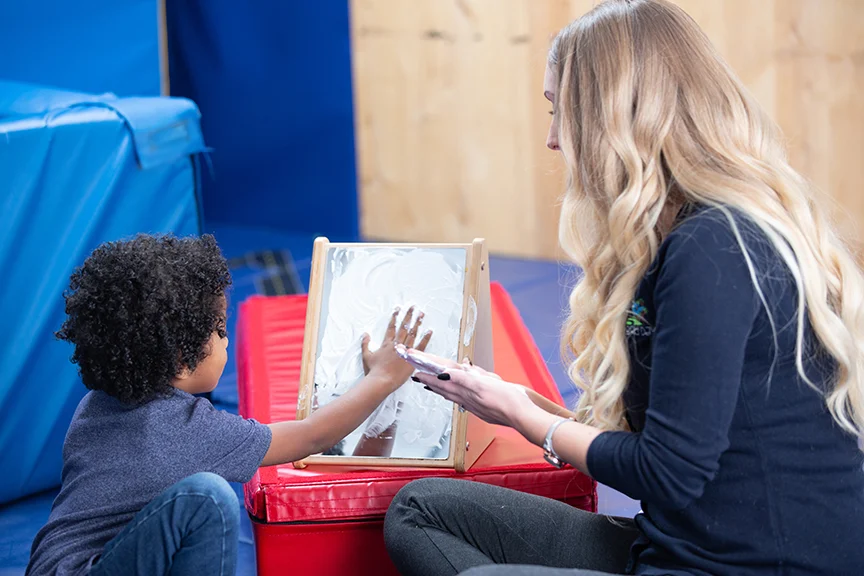
OT helps children develop skills for daily living. This might include getting dressed, using utensils, writing, or managing classroom routines. Occupational therapists also address sensory processing, helping children who are overwhelmed by noise, light, or touch develop strategies to stay regulated.
Early Intervention
Federal law guarantees services for children under three who have developmental delays or diagnosed conditions. Early intervention happens in natural environments like home or daycare. The earlier support begins, the more opportunity there is to build on a child’s developing brain. Services are typically free or low-cost to families.
Social Skills Training
These programs explicitly teach the unwritten rules of social interaction. How do you join a group? How do you tell when someone wants to end a conversation? What does that facial expression mean? Social skills groups provide structured practice with peers who have similar goals.
Critics point out that social skills training sometimes teaches autistic children to mask their authentic selves to fit neurotypical expectations. The best programs teach children to understand social situations while respecting their own needs and boundaries.
Parent Training
Many programs teach parents specific strategies to support their child’s development at home. This is not because parents are doing anything wrong. It is because consistency across settings helps children learn faster. Parent training might cover visual supports, communication strategies, or behavior management techniques.
Visual Supports
Many autistic children process visual information more easily than verbal information. Visual supports include picture schedules, social stories that explain situations in advance, choice boards, and visual timers. These tools reduce anxiety by making expectations clear and predictable.
Sensory Integration Therapy
This occupational therapy approach addresses how children process sensory input. Activities might include swinging, jumping on trampolines, or playing with different textures. The goal is to help the child’s nervous system organize sensory information more efficiently.
Functional Communication Training
When children communicate through behavior rather than words, this approach teaches alternative methods. If a child screams when frustrated, they might learn to use a picture to request a break. If they hit when overwhelmed, they might learn to sign “all done.” The key is replacing the behavior with an equally effective but more socially acceptable way to communicate.
Classroom Concepts
Inclusion
Inclusion means educating children with disabilities alongside their typically developing peers. True inclusion is not just physical presence in the same room. It means belonging, participating, and learning. It requires thoughtful support, adapted materials when needed, and a classroom culture that values all learners.
Accommodations
Accommodations change how a child accesses learning without changing what they are expected to learn. Examples include extended time on tests, a quiet space for work, or permission to type instead of writing by hand. Accommodations level the playing field.
Modifications
Modifications change what a child is expected to learn. A modified assignment might have fewer questions, simpler content, or different learning objectives. Modifications acknowledge that some children need a different curriculum to make meaningful progress.
Least Restrictive Environment
Federal law requires schools to educate children with disabilities in the least restrictive environment appropriate for their needs. This means schools should start with the general education classroom and only move to more specialized settings if the child cannot succeed there even with supports. LRE is individualized. What is least restrictive for one child might be too challenging or not challenging enough for another.
Paraprofessional
These classroom aides provide one-on-one or small-group support. They might help with organization, redirect attention, facilitate social interactions, or implement behavior plans. The best paraprofessionals fade their support over time so children develop independence.
Universal Design for Learning
UDL is an approach that makes classrooms accessible to all learners from the start. Instead of designing instruction for the “typical” student and then retrofitting accommodations, UDL offers multiple ways to learn, express knowledge, and stay engaged. When classrooms use UDL principles, fewer students need individualized accommodations.
Everyday Language
Support Needs
This phrase is replacing older terms like “high-functioning” or “low-functioning.” Support needs describe how much help a child requires in daily life. Needs can vary across different situations. A child might need minimal support at home but substantial support at school. Support needs can also fluctuate based on stress, health, or environment.
Sensory Sensitivities
Many autistic children experience the world more intensely than others. Sounds might be painfully loud. Lights might feel blinding. Clothing tags might itch unbearably. Food textures might trigger gagging. These are neurological differences, not pickiness or misbehavior. Understanding sensory sensitivities helps families create environments where their child can be comfortable.
Meltdowns vs. Tantrums
Parents need to understand this distinction. A tantrum is goal-directed behavior. A child wants something and uses crying or yelling to get it. When the child gets what they want, the tantrum stops. A meltdown is a neurological response to overload. The child has exceeded their capacity to cope. They have lost control, not making a choice. Meltdowns cannot be stopped by giving the child what they want. They require a safe space and time to recover.
Rigid Routines
Many autistic children thrive on predictability. They want the same breakfast every day, the same route to school, the same bedtime ritual. Changes can cause significant distress. This preference is not stubbornness. Routines provide security in a world that often feels chaotic and unpredictable.
Stimming
Self-stimulatory behaviors include hand-flapping, rocking, humming, or fidgeting. Stimming serves important functions. It can express emotion, provide sensory input, improve concentration, or reduce anxiety. Autistic self-advocates are clear: suppressing stimming is harmful. Instead of eliminating stims, families can help children find socially acceptable times and places for behaviors that might be disruptive.
Executive Functioning
This term describes mental processes that help us plan, organize, manage time, and control impulses. Many autistic children struggle with executive functioning. They might have trouble starting tasks, switching between activities, or keeping track of materials. These challenges have nothing to do with intelligence or motivation. They reflect differences in how the brain manages complex information.
Social Reciprocity
This phrase describes the back and forth of social interaction. Reciprocity includes taking turns in conversation, responding to social bids, and adjusting behavior based on social cues. Differences in social reciprocity do not mean a child does not want connection. They might connect in ways that look different from neurotypical social interaction.
Generalization
In therapy, children might master a skill easily in one setting but struggle to use it elsewhere. A child might greet the speech therapist beautifully but never say hello at school. Generalization means applying learned skills across different people, places, and situations. It often requires explicit teaching and practice.
Self-Regulation
Self-regulation is the ability to manage emotions and behavior. When regulated, a child can focus, learn, and interact appropriately. When dysregulated, they might be overexcited, shut down, or have a meltdown. Teaching self-regulation involves helping children recognize their body signals and use strategies like deep breathing, movement breaks, or sensory tools.
Advocacy and Cultural Terms
Ableism
Ableism is discrimination based on disability. It includes obvious actions like denying access or using slurs. It also includes subtle assumptions, like believing people with disabilities cannot have meaningful careers, relationships, or independence. Ableism is built into many systems and structures. Recognizing it is the first step toward dismantling it.
Accessibility
Accessibility means designing environments, programs, and materials so everyone can use them. This includes physical access like ramps and elevators, but also communication access like sign language interpreters or written materials, and sensory access like quiet spaces and adjusted lighting.
Awareness vs. Acceptance
Autism awareness simply means knowing autism exists. Acceptance goes further. It means embracing autistic people as they are, valuing their contributions, and including them fully in society. Many advocacy organizations have shifted from promoting awareness to demanding acceptance.
Neurodivergent
This umbrella term includes people whose brains work differently. It encompasses autism, ADHD, dyslexia, and other neurological differences. Neurodivergent is not a medical diagnosis. It is an identity term many people embrace proudly.
Self-Advocacy
Self-advocacy means speaking up for your own needs and rights. Parents often advocate for young children, but teaching self-advocacy skills prepares children to eventually speak for themselves. This includes knowing their diagnosis, understanding their strengths and challenges, and communicating what support they need.
Intersectionality
Autism intersects with other aspects of identity like race, gender, culture, and economic status. An autistic child who is also Black may face different challenges than a white autistic child. An autistic girl might be diagnosed later than an autistic boy because girls often mask symptoms differently. Intersectionality reminds us to consider the whole person, not just their diagnosis.
Disability Rights Movement
This decades-long movement fights for equal opportunities, inclusion, and civil rights for people with disabilities. Key principles include “nothing about us without us,” meaning people with disabilities must be included in decisions that affect them, and presuming competence, which means assuming people can understand and participate rather than assuming they cannot.
Strengths-Based Approaches
Rather than focusing only on deficits and what a child cannot do, strengths-based approaches identify and build on what a child does well. Every child has gifts. Recognizing them builds confidence and opens pathways to success.
Community Inclusion
This phrase describes full participation in community life. It means autistic people live in regular neighborhoods, attend local schools, work in integrated jobs, and participate in community activities. Inclusion is not just about being physically present. It requires genuine welcome and belonging.
Learning this language takes time. No parent masters it overnight. The terminology will become familiar through repeated exposure at appointments, meetings, and support groups.
Some words will resonate deeply with your family. Others might feel wrong or inadequate to describe your child. That is okay. Language is a tool, not a rulebook. As you learn these terms, remember that behind every technical phrase is your unique child. The labels and categories help professionals communicate and access services. They should never reduce your child to a checklist of symptoms.
Your child is a whole person with preferences, feelings, and potential. They might love certain foods, have a great sense of humor, show remarkable determination, or possess deep empathy. The autism diagnosis is only one part of their identity, not the entirety of who they are.
Connect with other families. Parent support groups provide not just emotional support but also practical knowledge. Experienced parents can explain what that acronym means, warn you about common pitfalls, and share with you what worked for their family.
Listen to autistic adults. They have lived experience that professionals and parents cannot fully understand. Their insights about what helped or hurt them as children can guide your decisions.
Trust yourself. You know your child better than anyone. When professional recommendations conflict with your instincts, speak up. When something is not working, say so. You are an expert on your child even if you are just learning the professional language.

Blue Bird Day—the first therapeutic preschool and kindergarten program in the nation—fosters socialization, sensory regulation, and pre-academic learning in children ages 2-6 years. Our compassionate therapists practice a relationship-based and family-centered approach, provide parent training, and collaborate on goals and individualized intensive treatment plans for your child.
We believe in a collaborative and multi-disciplinary team approach to therapy. A team of occupational therapists, speech-language pathologists, dietitians, developmental therapists, behavioral therapists, physical therapists, and therapeutic assistants are created for each child to ensure child and family are fully supported and the best possible results are achieved.
Options for individualized, group and virtual therapy sessions are available as well.
Want to learn more or you have a specific question? Feel free to connect with us here!