Your child might not always give you their attention or respond to “please” or “thank you,” but what happens when you press play and their favorite song starts playing? Suddenly, their eyes and ears are totally focused, on you. That’s not luck. That’s the right frequency.
Music speaks its own language. It creates patterns that your child’s brain latches onto. It wraps emotions into melodies. And best of all? It meets your child exactly where they are.
Think about it: we spend so much time trying to find the perfect words, the right tone, the magic phrase that finally clicks. Meanwhile, a three-minute song can do what an hour of explaining could not.
For kids with autism, ADHD, dyslexia, and other brain variations, music is not background noise. It’s the main event.
For many, typical communication sometimes feels like static on the radio, while music comes through crystal clear every time. You’ve probably seen it yourself.
The child who struggles with eye contact? They’ll drum along to a beat without hesitation. The child who finds verbal instructions overwhelming? They’ve memorized every lyric to their favorite song.
Music says, “Hey, I speak your language.” No pressure. No expectations. Just pure connection through sound, rhythm, and feeling.
The science backs this up and you are probably already seeing this at home. When music plays, something special happens in your child’s brain. Patterns emerge. Emotions find their outlet. Chaos finds its rhythm.
Want to know why music is magical for neurodiverse kids? Let’s crank up the volume on some amazing science and find out!
Lighting Up the Brain
Imagine a fireworks show inside your brain. That’s what happens when we listen to music! Your brain’s not just hearing a song; it’s processing pitch, rhythm, melody, emotion, even the memories that song brings back. That’s why a single song can send a shiver down your spine or bring back memories from years ago.
But for neurodiverse children, this neural excitement does even more. Brain imaging studies (like those using fMRI) have shown that music lights up the auditory cortex, motor areas, speech and language centers, and the limbic system all at once. So when your child is tapping along to a beat, their brain is making vital connections that support growth and adaptation.
Consider Dylan, a 9-year-old with autism spectrum disorder. Dylan’s mom noticed he struggled with focus during homework, but could play the same drum pattern for ten minutes without losing concentration. Drumming was building more than rhythm—it was strengthening the neural pathways needed for attention and persistence.
This cross-hemispheric activation occurs when the left and right sides of the brain “talk” better. Translating into practical benefits.
Research has shown that children with developmental differences who regularly engage with music can see improvements in coordination, processing speed, and even spatial reasoning.
Some studies even suggest that learning an instrument as a child (particularly for those with ADHD or dyslexia) may boost academic abilities in math and reading.
Try a “musical warm-up” before demanding activities. A few minutes of clapping to a favorite song or playing an instrument together helps prime your child’s brain for learning.
Calm and Emotional Harmony
Let’s face it: big feelings happen to all kids, and for neurodiverse children, those emotional waves can sometimes feel like tidal waves. Emotional regulation can be a daily challenge, involving everything from anxiety and sensory overload to frustration and meltdown moments.
Music can create calm and emotional harmony. There’s real science behind why music is calming. When a child listens to soothing rhythms, it helps regulate the limbic system (the brain’s emotional center) and lowers the cortisol levels associated with stress. Predictable rhythms provide a sense of order.
Let’s look at Jamie, a 7-year-old with sensory processing disorder. Transitions were tough; getting from playtime to dinnertime often meant tears. Introducing a gentle “transition song” ritual with a calming melody (think soft guitar or piano) signaled the change and provided a soothing, predictable bridge between activities. Over time, Jamie learned to associate that song with comfort and stability, making transitions smoother for everyone.
Music also empowers self-expression for children who may not have the words to describe their feelings. Through humming, improvising on an instrument, or singing along, kids can vent frustration, express joy, or process sadness in a healthy, nonverbal way. For many, it’s “singing the blues” and feeling better afterwards.
Create daily playlists for different moods or parts of your routine (waking up, winding down, meal times). Encourage your child to help select the songs and adjust volume and tempo to match their needs.
Boosting Brainpower and Coordination
What if singing or dancing could sharpen your memory and help you pay better attention? Well, it can! Music’s repetitive, structured nature is a huge asset for neurodiverse children, especially those grappling with working memory and attention-span challenges.
Researchers have found that rhythm-based activities can significantly improve attention and impulse control for kids with ADHD. When a child learns to follow a beat or keep time in a group activity, they’re practicing the same executive-function skills needed in the classroom—like self-monitoring, sequencing, and switching focus between tasks.
Take Maya, an 8-year-old diagnosed with ADHD. Homework time used to be a battle zone until her parents discovered that listening to instrumental jazz helped her sustain focus longer. The steady rhythm offered a background structure that reduced distractions and made it easier to complete one thing at a time.
Language and speech development also get a big boost from musical engagement. Techniques like melodic intonation therapy use simple tunes to support speech production in children with language delays or apraxia.
Many teachers use songs to teach vocabulary or sentence structures. If you’ve ever seen a child “sing” their way through the alphabet, you know exactly what this looks like in practice!
Music is for the mind and for the body. Dancing, drumming, clapping, or marching along with music develop fine and gross motor skills. For children working to strengthen muscle tone or coordination, moving to music turns therapy into play.
Try “call and response” games where you clap a rhythm and your child repeats it. Or make up silly lyric swaps for familiar tunes to practice memory and language skills. Incorporate movement—marching, hopping, waving scarves—to make music multisensory.
Making Friends
Social interaction can be tricky for neurodiverse children, especially those who find verbal communication overwhelming or imprecise. Music offers a social playground where everyone can participate, contribute, and belong.
Music classes or group activities (like drum circles, choir, or classroom singalongs) provide a natural setting for practicing turn-taking, listening, cooperation, and flexibility.
In these spaces, the “rules” are often embedded in the music. Like waiting for your cue, listening for your part, playing together. This lowers the pressure and makes social practice more intuitive.
Imagine a classroom of kids, some neurodiverse and some neurotypical, all joining instruments together for a song. There are no wrong notes, just shared creation.
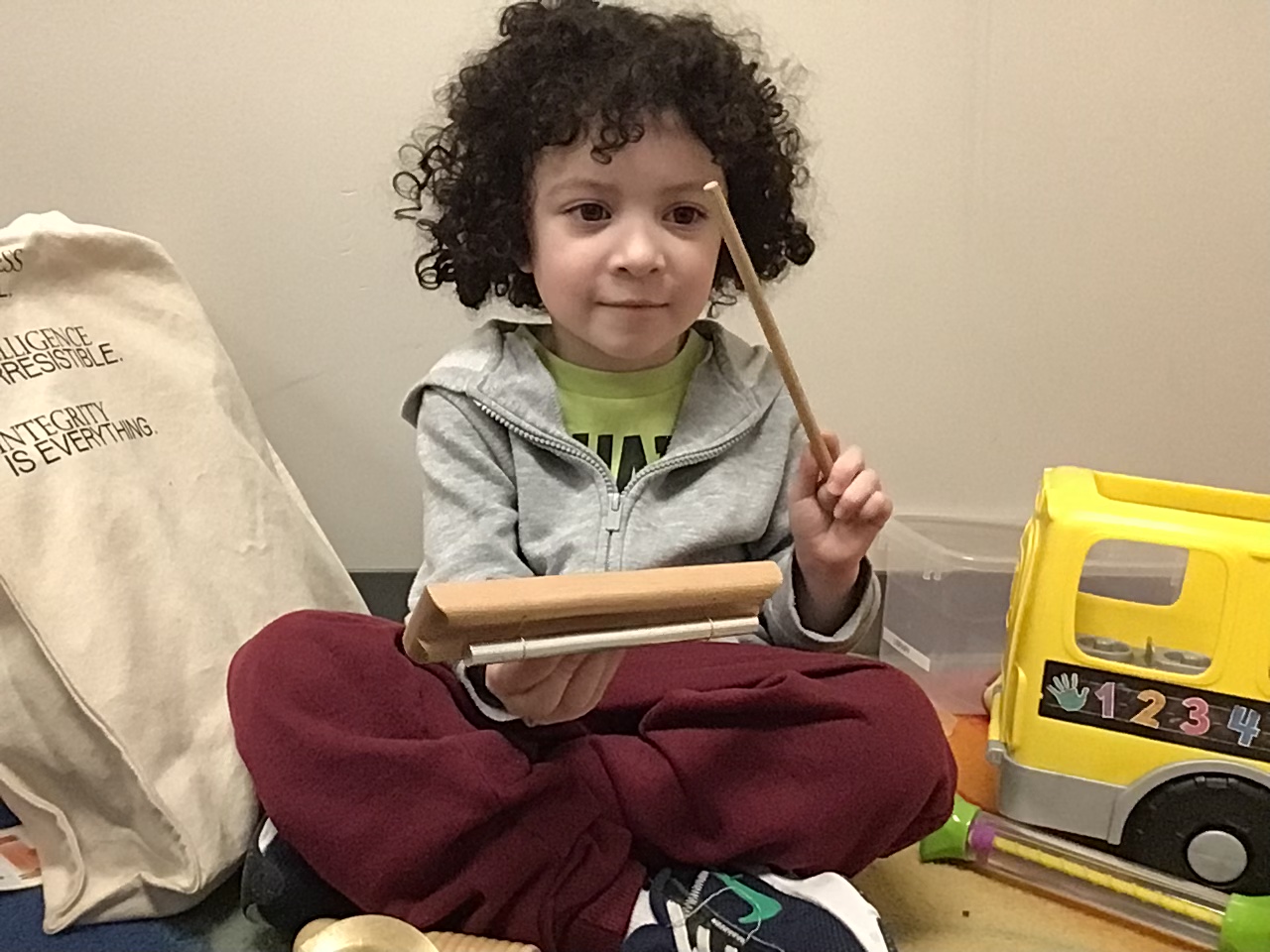
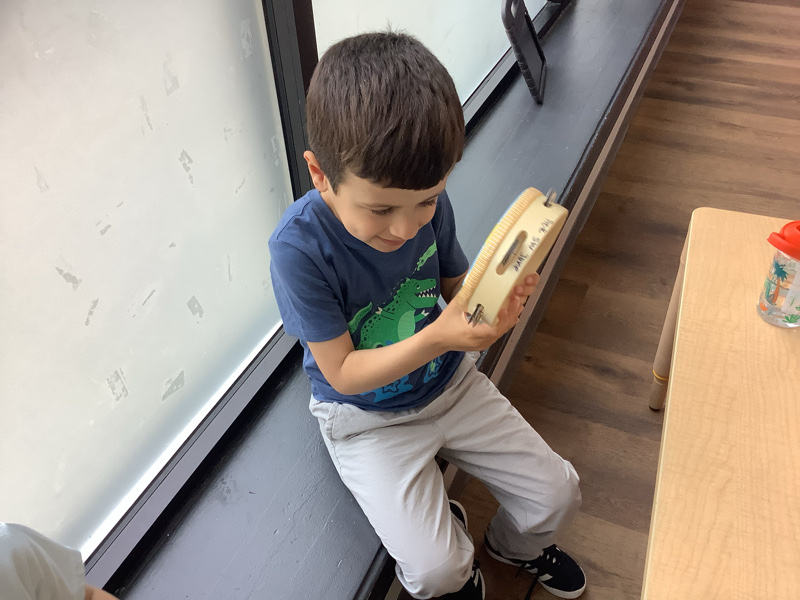
A nonverbal child might keep time on a tambourine, while another leads a call-and-response chorus. This kind of collaboration fosters inclusion and empathy for neurodiverse kids and for everyone involved.
Even at home, music can strengthen family bonds. From creating custom “welcome home” jingles to using music as a timer for brushing teeth, shared musical rituals become anchors of connection and joy.
Research shows that families who make music together enjoy stronger relationships and more positive interactions, which supports the emotional health of all members.
A family introduced a cheerful song when it was time to clean up toys. Instead of nagging, they’d press “play,” and everyone would dance as they tidied. Over time, the song itself became a cue. No reminders needed!
Voice and Confidence
Creativity is what makes us human, and every child deserves to feel proud of what makes them unique. For neurodiverse children—who may struggle with rigid structures or expectations—music provides a flexible, forgiving space to take risks and celebrate their individual strengths.
Learning an instrument, improvising a song, or simply singing boldly can be transformative. Achieving mastery, whether it’s nailing a tricky drum solo or making up silly lyrics, gives children a sense of control and accomplishment. This, in turn, nurtures confidence and resilience—a belief that “I can do hard things.”
Music’s adaptability also helps children explore their own interests and cultural connections. Some gravitate to traditional folk songs, while others love electronic beats or hip-hop. Encouraging exploration in these directions supports both personal identity and cultural pride.
Celebrate small victories—learn a new verse, master a new rhythm, or invent a song about your day! Record their performances (with permission) to create a portfolio of “proud moments” they can revisit.
Music in Your Life
Below are some ideas to help you get started, whether you’re a parent, caregiver, or educator:
- Start slow and follow your child’s lead. Observe what kinds of music, instruments, or movements they gravitate towards. Their enthusiasm is your best guide.
- Use music for transitions and routines. Pick cheerful tunes for waking up, gentle melodies for bedtime, and energetic beats for chores or movement breaks.
- Incorporate instruments and homemade sound makers. Pots and pans become drums, rice in a bottle makes a shaker, and a cardboard tube can become a trumpet.
- Schedule music time into every day. Even five minutes of singing, dancing, or listening together can have a big impact.
- Explore technology. There are fantastic apps that introduce music theory in fun, game-oriented ways. Experiment with virtual instruments, digital mixing tools, or music-making software.
- Pair movement with music. March, hop, spin, or wave colorful scarves to the beat. Not only does this burn off energy, but it builds coordination too.
- Make a family playlist. Let each family member add their favorites. This playlist can become the soundtrack to holidays, car rides, or special occasions.
For educators:
- Start the school day with a musical greeting. It sets a positive, welcoming tone and signals the brain to get ready to learn.
- Use songs to teach academic content. Spelling, geography, even math tables can be set to familiar tunes.
- Encourage group music-making. Collaborative songwriting, rhythm games, or class performances support both social and academic development.
- Celebrate neurodiversity through diverse music selections. Incorporate music from various cultures and genres, including works by neurodiverse artists.
Music Therapy
Music therapy is more than just enjoying a playlist or casual jam session. It’s a structured, research-backed clinical approach facilitated by certified professionals who use music to achieve specific developmental, emotional, or behavioral goals.
Therapists assess each child’s strengths, challenges, and preferences before designing individualized interventions. These might include improvisation, songwriting, receptive listening, or guided movement.
For example, if a child struggles with transitions, a therapist might create a personalized “transition song” routine. If language is a challenge, melodic intonation or call-and-response singing can build verbal skills.
Numerous studies highlight the impact of music therapy:
- A 2022 meta-analysis found that children with autism who participated in music therapy sessions demonstrated improved social engagement, attention, and nonverbal communication compared to those who did not.
- Research in children with ADHD has shown better impulse control and mood stabilization through regular, rhythm-based group music sessions.
- Children with Down syndrome and developmental delays often make measurable gains in language, motor skills, and emotional regulation through structured music interventions.
Practical Tips for Starting Music Therapy:
- Seek out a board-certified music therapist with experience in neurodiversity.
- Set clear, realistic goals and share your child’s interests in the intake.
- Be patient; progress is often gradual, but even small steps add up.
- Ask the therapist for ideas to reinforce music strategies at home.
- Attend a session if possible and observe techniques to try yourself.
Music is a joyful, powerful, and scientifically proven way to support a neurodiverse child’s development. It’s not just background noise; it’s a key to unlocking their incredible potential. Whether you’re a parent, teacher, caregiver, or therapist, you can make music a source of growth, resilience, and happiness for every child.
So go ahead—sing, dance, play, and make some joyful noise together. The benefits are music to everyone’s ears!
Frequently Asked Questions (FAQ)
Q: Do I need to be a musician to use music with my child?
A: Not at all! The most important thing is your enthusiasm. You can sing off-key, dance goofy, and explore music together. Your positive engagement is what matters most.
Q: What kind of music is best?
A: Follow your child’s lead! Some kids are calmed by classical music, while others might prefer predictable pop songs or rhythmic drumming. Pay attention to how they react to different sounds and genres. There is no one-size-fits-all answer.
Q: My child is very sensitive to sound. How can I introduce music without causing overwhelm?
A: Start slow and low. Play music quietly for short periods. Try gentle, instrumental pieces without lyrics or strong beats. Acoustic music, nature sounds, or even simple humming can be a great starting point. Always watch your child’s cues and respect their sensory limits.
Q: What’s the difference between music education and music therapy?
A: Music education focuses on teaching musical skills, like how to play an instrument or read music. Music therapy uses music as a clinical tool to address specific non-musical goals, such as improving communication, motor skills, or emotional regulation, led by a board-certified music therapist.
Q: Can music help my child manage anxiety or behavioral challenges?
A: Yes! Research shows that music can lower anxiety and improve emotional regulation, especially when paired with structured routines and chosen by the child. Music therapy can target specific behavioral goals and help children learn to cope with stress.
Q: Is there an ideal age to start using music with my child?
A: It’s never too early or too late. From lullabies for infants to movement games for teens, music connects with all ages. Just choose age-appropriate songs and activities that fit your child’s interests.
Q: How can I find a qualified music therapist?
A: Look for board-certified music therapists (MT-BC credentials) through professional organizations such as the American Music Therapy Association. Ask about their experience with neurodiverse children and discuss your goals before starting.
Q: My family doesn’t have instruments—can we still make music together?
A: Absolutely! Your voice, hands (for clapping), and simple household items can create endless musical opportunities. Everyday objects—pots, pans, wooden spoons, empty containers—make great instruments. The magic is in the making, not the materials.
If there’s one thing to remember, it’s this: You don’t need to be an expert to bring the power of music into your child’s world. All you need is a willingness to share a song.
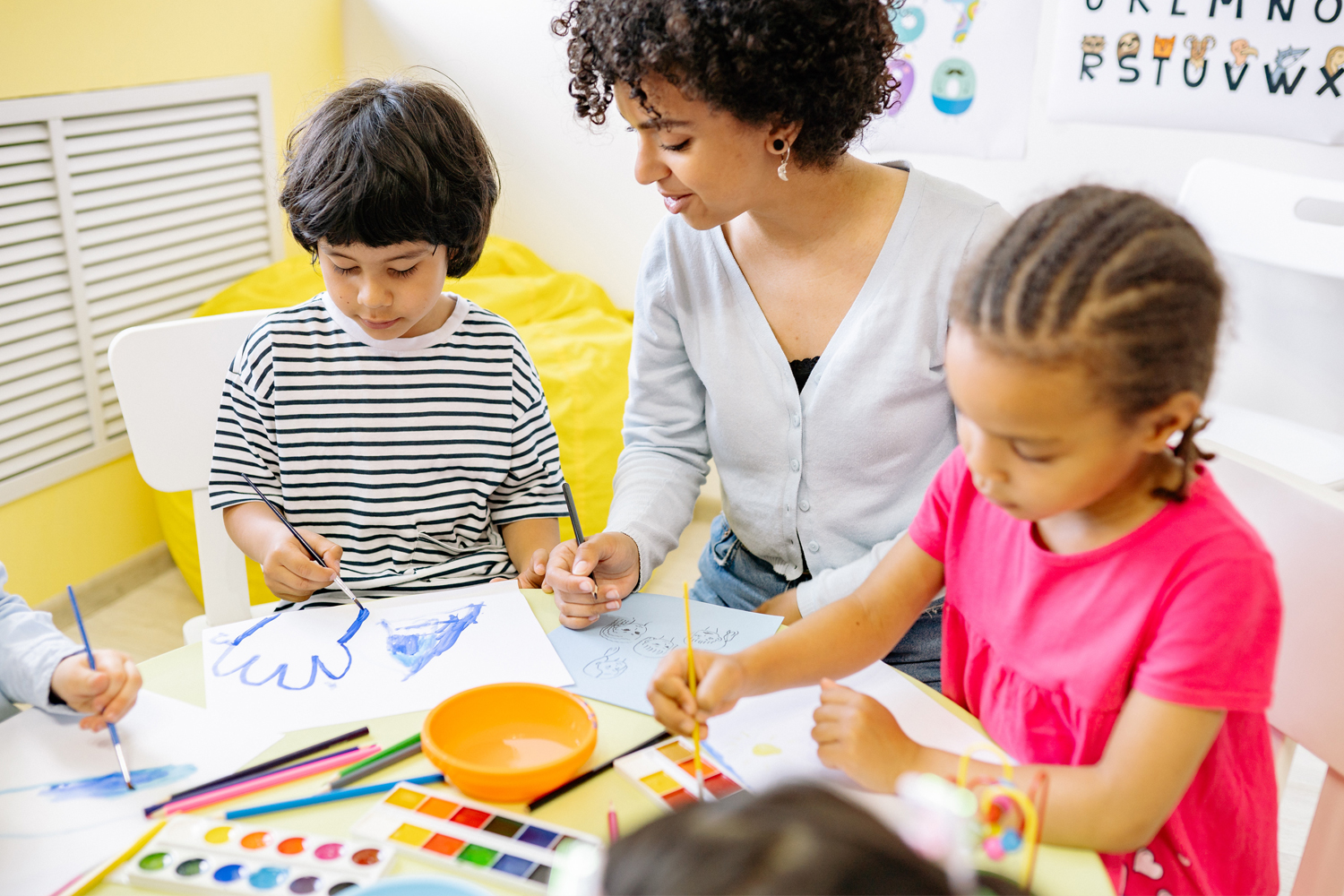
Blue Bird Day—the first therapeutic preschool and kindergarten program in the nation—fosters socialization, sensory regulation, and pre-academic learning in children ages 2-7 years. Our compassionate therapists practice a relationship-based and family-centered approach, provide parent training, and collaborate on goals and individualized intensive treatment plans for your child.
We believe in a collaborative and multi-disciplinary team approach to therapy. A team of occupational therapists, speech-language pathologists, dietitians, developmental therapists, behavioral therapists, physical therapists, and therapeutic assistants are created for each child to ensure child and family are fully supported and the best possible results are achieved.
Options for individualized, group and virtual therapy sessions are available as well.
Want to learn more or you have a specific question? Feel free to connect with us here!