
If you are searching for a therapeutic daycare center in Chicago, you’re probably looking for more than just childcare or someone to watch your child.
Like most parents with a neurodiverse child in Chicago, you’re looking for a place where your child can build sensory, behavioral, developmental and communication skills. A place that truly understands their needs and helps them to grow.
What many families are discovering is that most daycares aren’t built to provide therapeutic care. Only therapeutic preschools are.
That’s why Blue Bird Day is so special. It’s a full (or half) day therapeutic preschool in Chicago and Wheaton that integrates occupational therapy, speech therapy, ABA, physical therapy, and social work into every part of the day. Therapy is woven into the curriculum.
Blue Bird Day in Chicago was the first therapeutic preschool and kindergarten program of its kind in the nation.
With over a decade of experience working with neurodiverse children in Chicago, our program is designed specifically for children who benefit from structured routines, sensory support, communication development, emotional regulation, and therapist-guided peer interaction.
In this guide, we will explain the difference between a therapeutic daycare and a therapeutic preschool, how our neuro-affirming care works, and practical advice on how to choose the right program for your child.
If you’d like more personalized insights, please contact us today. We’re here to support you every step of the way.
Therapeutic Daycare vs. Therapeutic Preschool in Chicago: What’s the Difference?
Let’s start with the heart of the matter. A daycare, even a wonderful one, focuses on care. A therapeutic preschool focuses on learning. That single difference shapes everything, from how the staff is trained to how the classroom is designed to how your child spends each hour of the day.
A therapeutic daycare in Chicago typically offers standard childcare with therapy added on top, often a session or two per week. A therapeutic preschool builds the entire day around therapy, so learning and development happen together in every moment.
Below, we break down five key reasons a therapeutic preschool offers deeper, more meaningful support than a therapeutic daycare.
Why a Therapeutic Preschool Works Better Than a Therapeutic Daycare
1. Therapy Is Integrated All Day — Not Added On
Some daycares offer occasional therapy. A therapist might stop by once or twice a week, pull your child aside for 30 minutes, then leave. The rest of the day looks like a standard daycare.
A therapeutic preschool works differently. Here, the entire day is built around therapy. It isn’t a side service. It’s the foundation.
At Blue Bird Day, children learn in an environment designed and staffed by a full multidisciplinary team, including:
- Occupational therapists — These specialists help your child build the everyday skills that make life easier, like using scissors, holding a crayon, managing textures, and processing sensory input so the world feels less overwhelming.
- Speech-language pathologists — These experts support communication in every form, whether that’s spoken words, sign language, picture boards, or speech-generating devices. Whatever helps your child share their voice, we celebrate it.
- Behavior analysts — These professionals help children learn new skills by breaking big goals into small, achievable steps. Their focus is understanding why behavior happens, then building supportive strategies around it.
- Mental health specialists and social workers — These experts help children develop emotional regulation and resilience in a patient, caring way.
- Physical therapists — These specialists focus on helping children build strength, coordination, and mobility through fun, engaging activities. They support functional skills like walking, balance, and posture, enabling your child to gain independence and confidence in everyday movements.
Here’s what makes this so powerful: our therapists work in teams and collaborate constantly. Every routine, every transition, and every activity is intentionally structured to support regulation, communication, motor skills, and social development.
For example, snack time isn’t just snack time. It becomes a chance for an SLP to encourage new words, an OT to practice fine motor skills like opening a container, and a social worker to guide peer interaction. One moment, many layers of support.
This kind of seamless, all-day therapy simply isn’t possible in a traditional daycare setting. It takes a team, a plan, and a shared commitment to your child’s progress. That’s exactly what we’ve refined over more than a decade of doing this work.
2. Neuro-Affirming Care for Autistic and Neurodiverse Children
Many families searching for a therapeutic daycare in Chicago share a common hope. They want a place where their child’s differences are understood and respected, not corrected or hidden.
That hope guides everything we do. Blue Bird Day is built around neuro-affirming care. This means we see neurological differences, like autism, as natural variations of the human brain, not disorders to be fixed. Your child’s unique way of experiencing the world isn’t a problem to solve. It’s a strength to understand.
If you’re specifically searching for an autism preschool in Chicago, this approach matters. In practice, neuro-affirming care at Blue Bird Day includes:
- Sensory-friendly classrooms — Our spaces feature soft, adjustable lighting, calming sounds, comforting textures, and quiet areas where children can take a break. We design the environment around your child’s needs, not the other way around.
- Child-led communication — We follow your child’s natural interests to spark communication. If a child loves music, we might use songs to build vocabulary. This approach helps children connect faster because it feels meaningful to them.
- No forced eye contact — Some children find eye contact uncomfortable or distracting. We respect that. Connection doesn’t require a specific kind of gaze, and we never pressure a child to perform social behaviors that feel unnatural.
- No compliance-based teaching — We don’t focus on making children obey for the sake of obedience. Instead, we build genuine skills through play, relationships, and trust.
- Respect for each child’s unique learning style — We honor stimming and repetitive movements as valid coping tools. These behaviors often help children feel calm and grounded, so rather than eliminating them, we support them.
The goal is simple. We want children to feel safe, confident, and understood, not pressured to fit into neurotypical expectations.
Parents consistently tell us how much this shift matters. When a child feels accepted for who they are, they relax. And when children relax, they learn. This strengths-based approach doesn’t just support development. It protects your child’s sense of self.
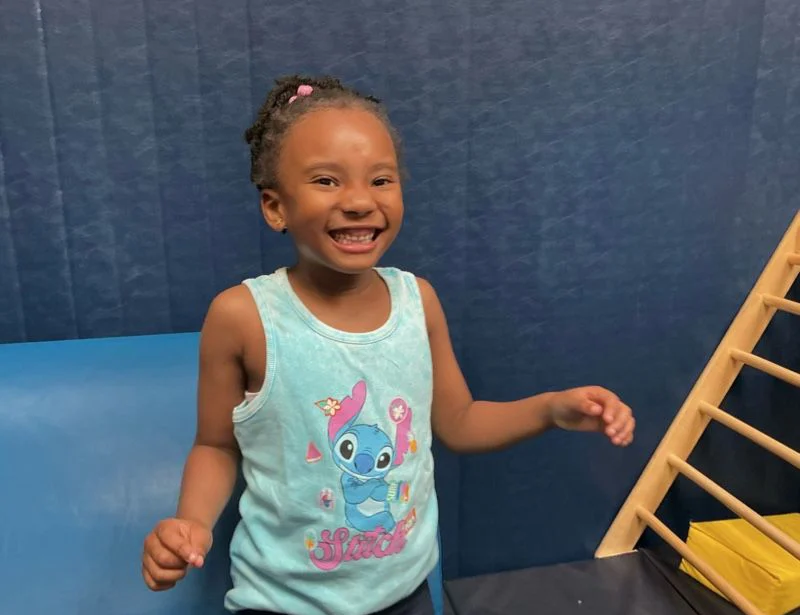
3. Predictable Structure That Reduces Overwhelm
Change can feel hard for many children, especially those with sensory or developmental needs. Unpredictability can lead to anxiety, meltdowns, and shutdowns. That’s not misbehavior. It’s a nervous system asking for support.
Children thrive when they know what comes next. That’s why a therapeutic preschool relies on thoughtful, predictable structure. At Blue Bird Day, that includes:
- Visual schedules — Pictures and symbols help children see what’s coming, which reduces uncertainty and anxiety.
- Sensory breaks — Regular breaks give children a chance to reset, whether through deep-pressure input, movement, or quiet time in a calming space.
- Consistent routines — When each day follows a familiar rhythm, children feel more secure and in control.
- Therapist-guided transitions — Moving from one activity to the next can be one of the hardest moments of the day. Our therapists smooth these transitions with tools like countdowns, songs, and quick sensory activities such as stretching or deep breathing.
A Typical Day at Our Therapeutic Preschool in Chicago
Our daily schedule is thoughtfully designed to balance learning, movement, and rest. A typical day includes:
- Morning regulation — A calm, structured start to help children settle in and feel ready.
- Sensory gym time — Movement and sensory input that help children feel grounded, using swings, balance activities, and more.
- Small-group learning — Focused, hands-on learning in a low-ratio setting where each child gets attention.
- Peer play — Guided chances to build friendships and practice social skills.
- Movement breaks — Time to get up, stretch, and release energy.
- Outdoor time — Fresh air, nature, and gross motor play.
- Individual therapy — One-on-one sessions tailored to your child’s specific goals.
This predictable framework does something remarkable. It frees up your child’s energy. When children aren’t spending all their effort managing uncertainty, they have more room to regulate, engage, and learn with confidence. We’ve watched this structure transform children’s days again and again over more than a decade of care.
4. Support for the Whole Family
You are the expert on your child. And you deserve support, too.
A therapeutic preschool doesn’t just serve the child. It partners with the entire family. We understand how exhausting it can be to manage appointments, paperwork, and the emotional weight of advocacy. Our shared goal is to lighten that load and walk beside you.
Blue Bird Day provides:
- Parent coaching — We share practical strategies you can use at home, so the progress your child makes here continues in daily life. When skills carry over across settings, they stick.
- IEP preparation — The Individualized Education Program (IEP) process can feel confusing and intimidating. An IEP is the plan your child’s school follows to provide special education support. We help you understand it, prepare for meetings, and advocate confidently.
- Collaboration with pediatricians — We coordinate with your child’s doctors and other providers, so everyone stays on the same page. No more managing fragmented care on your own.
- Progress updates — We keep you informed with detailed tracking, so you can see the specific milestones your child reaches.
- Transition planning — We help you plan the next step, ensuring your child moves toward their future with the right support in place.
Families are never left to navigate the system alone. Parents often tell us that the coordinated, under-one-roof approach dramatically reduces their stress. Instead of driving to five separate providers and repeating your child’s story again and again, you have one dedicated team that knows your child well.
That kind of partnership is something we’ve built and refined over years of walking alongside Chicago families.
5. School Readiness Built Into Every Day
A daycare focuses on getting through the day. A therapeutic preschool focuses on preparing for what’s next.
One of the most common worries we hear from parents is this: Will my child be ready for school? It’s a valid question, and it deserves a thoughtful answer.
At Blue Bird Day, school readiness isn’t a separate class. It’s woven into everything we do. Through our therapeutic rotations, which simulate the structure of a real preschool or kindergarten day, children build the exact skills they’ll need to succeed in a classroom.
These skills include:
- Emotional regulation — Learning to manage big feelings and recover from frustration.
- Communication skills — Sharing needs, ideas, and questions in whatever way works best for them.
- Sensory processing — Handling the sights, sounds, and textures of a busy classroom.
- Social interaction — Taking turns, sharing, and connecting with peers.
- Classroom routines — Following schedules, transitioning between tasks, and joining group activities.
- Peer engagement — Building friendships and cooperating with others.
- Motor skills — Developing the fine and gross motor abilities needed for writing, cutting, and moving through a school day.
Here’s an important point for many families: our goal is to prepare children for mainstream success, not to create dependency. We design our program to build transition-ready abilities. We want to expand your child’s options, not limit them.
These are the skills that help children step into school, and everything that follows, with confidence and capability.
Who Benefits From a Therapeutic Preschool in Chicago?
Our therapeutic preschool serves children ages 2 to 6 with a wide range of developmental needs. We provide daily therapeutic support for children with:
- Autism Spectrum Disorder
- Sensory Processing Disorders
- ADHD
- Communication delays and articulation or phonological disorders
- Developmental delays
- Cerebral Palsy
- Down syndrome
- Genetic disorders
- And more diagnoses
If your child needs more support than a traditional daycare or mainstream preschool can offer, an integrated therapeutic preschool may be the right fit.
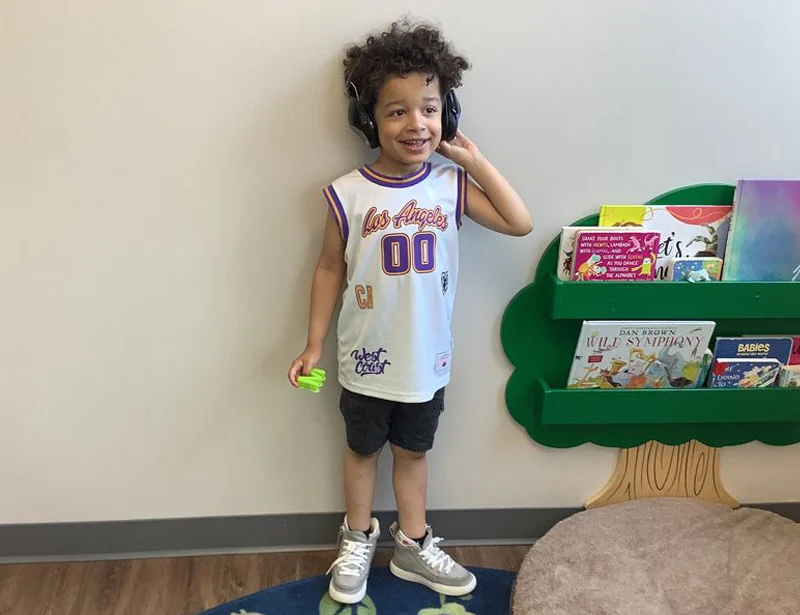
Why Families Choose Blue Bird Day Over Therapeutic Daycare Options
When families compare their options, they often realize that what they were searching for all along was a therapeutic preschool. Here’s what Blue Bird Day offers:
- Full (and half) day therapeutic preschool programming for a consistent, immersive experience
- Multidisciplinary therapy integrated into learning, so every moment supports growth
- Sensory-friendly environments designed around your child’s comfort
- Highly trained pediatric therapists who specialize in early childhood development
- Individualized treatment plans tailored to your child’s unique strengths and goals
- A warm, supportive community where families find belonging and reassurance
- Over a decade of experience as one of the nation’s pioneering therapeutic preschool programs
If you’ve been searching for a therapeutic daycare in Chicago, Blue Bird Day may be exactly what your child needs instead.
Ready to Explore a Therapeutic Preschool in Chicago?
Taking the next step is easier than you might think. Blue Bird Day is here to help you every step of the way.
Your next step is simple:
- Schedule a tour to see our sensory-friendly classrooms in person and meet the therapists who could soon be part of your child’s team.
- Speak with our team to ask questions and share your child’s story. We’ll listen carefully.
- Learn more about our full-day therapeutic preschool programs and how they fit your family’s goals.
Reach out today. Together, we’ll build a plan tailored to your child’s success.
Frequently Asked Questions About Therapeutic Preschool in Chicago
What is the difference between a therapeutic daycare and a therapeutic preschool in Chicago?
A therapeutic daycare offers childcare with some therapy added in, often a session or two a week. A therapeutic preschool integrates therapy into every moment of the day. At Blue Bird Day, our full-day therapeutic programming is designed and delivered by a team of occupational therapists, speech-language pathologists, behavior analysts, physical therapists, social workers, and mental health specialists working together. Therapy isn’t an add-on here. It’s the foundation of everything.
Does Chicago have therapeutic daycares?
Chicago has very few true therapeutic daycares. Most daycares aren’t structured or staffed to support sensory needs, communication differences, or behavioral challenges in a meaningful way. Many families discover that a therapeutic preschool offers the deeper, more coordinated support their child actually needs.
Is Blue Bird Day a daycare?
No. Blue Bird Day is a therapeutic preschool and kindergarten program in Chicago offering full (and half) day programming with integrated therapy, sensory support, and structured, therapist-guided peer interaction. We’re an intensive therapy program that uses a family-centered, team-based approach.
Who benefits from a therapeutic preschool?
Children with autism, sensory processing differences, communication delays, emotional regulation needs, behavioral challenges, ADHD, or developmental differences often benefit most from therapeutic preschool programs. If your child needs more support than a traditional daycare or preschool can offer, a therapeutic preschool may be a strong fit.
Does Blue Bird Day accept insurance?
Yes, we accept insurance.
We are in network with the following: ▪ Aetna PPO ▪ Blue Cross Blue Shield PPO ▪ Blue Cross Blue Shield Blue Choice PPO ▪ Tricare Humana Military East (for ABA benefits only). We also accept private-pay.
We do not accept: ▪ Medicaid ▪ Blue Cross Blue Shield HMO ▪ Blue Cross Blue Shield Medicare Advantage PPO ▪ Blue Cross Blue Shield Community Health ▪ Any other HMO plans. We can also bill to any qualifying out-of-network insurance plans, which is subject to review by our admin team.
Is Blue Bird Day good for autistic children?
Absolutely. Blue Bird Day is a neuro-affirming therapeutic preschool designed specifically to support autistic and neurodiverse children. We celebrate each child’s unique way of experiencing the world. That means no forced eye contact, no compliance-based teaching, and full respect for your child’s individual learning style.
How does a therapeutic preschool prepare children for kindergarten?
Children build communication, emotional regulation, sensory processing, social skills, classroom routines, motor skills, and independence, all through play-based, therapist-guided activities. Our therapeutic rotations simulate a real classroom day, so children practice the exact skills they’ll need for school success. Our aim is always to expand your child’s options and prepare them for mainstream environments.
Can I tour Blue Bird Day?
Yes, and we encourage it. Families are welcome to schedule a tour to see our sensory-friendly classrooms, observe our program in action, and meet the therapists who make it all possible. Seeing the space for yourself is often the moment everything clicks.
What ages does Blue Bird Day serve?
Blue Bird Day serves children ages 2 to 6. Our program is designed around early childhood development, which is a powerful window for growth. If your child is older or younger, our sister companies might be a better fit.
How many children are in each group?
We keep our ratios small, with roughly one adult for every three children. This low ratio means your child receives focused, individualized attention throughout the day. Small groups also make peer play more manageable and less overwhelming, which helps children build social skills at a comfortable pace.
My child has been in other programs without much progress. How is this different?
That’s a fair and important question. We embed therapy directly into natural learning activities instead of relying on isolated, once-a-week sessions. Our integrated model addresses the root needs that fragmented programs often miss. Because our therapists collaborate as a team and track progress closely, you’ll be able to see specific, measurable milestones as your child grows.
I’m worried about disrupting my child’s current routine and relationships. What can we do?
That’s a completely understandable concern, and we take it seriously. We can coordinate with your child’s current providers to help keep the transition smooth. Our predictable, structured environment is specifically designed for children who find change difficult, and the relationships children build here often become strong, lasting bonds.

Blue Bird Day—the first therapeutic preschool and kindergarten program in the nation—fosters socialization, sensory regulation, and pre-academic learning in children ages 2-6 years. Our compassionate therapists practice a relationship-based and family-centered approach, provide parent training, and collaborate on goals and individualized intensive treatment plans for your child.
We believe in a collaborative and multi-disciplinary team approach to therapy. A team of occupational therapists, speech-language pathologists, dietitians, developmental therapists, behavioral therapists, physical therapists, and therapeutic assistants are created for each child to ensure child and family are fully supported and the best possible results are achieved.
Options for individualized, group and virtual therapy sessions are available as well.
Want to learn more or you have a specific question? Feel free to connect with us here!