For many families, the preschool years are filled with big emotions—joy, curiosity, frustration, overwhelm, excitement, and everything in between. For neurodiverse children, these emotions can feel even bigger. A loud noise may trigger panic. A transition may feel impossible. A misunderstood request may lead to tears.
Parents often wonder whether their child is “too sensitive,” “too rigid,” or “too emotional,” when in reality, your child is navigating a world that feels unpredictable, fast, and overwhelming to their developing nervous system. We understand how overwhelming this can feel, and your concerns are completely valid.
At Blue Bird Day’s Therapeutic Preschool and Kindergarten in Chicago, emotional regulation is not treated as a behavior problem. It’s understood as a vital developmental skill—one that grows through connection, sensory support, communication, and co-regulation with trusted adults.
As an experienced therapeutic preschool and kindergarten with years of experience in early childhood therapeutic education, Blue Bird Day specializes in helping neurodiverse children build the emotional foundations they need to participate, learn, and thrive.
This article explores what emotional regulation is, why it matters, and how our multidisciplinary, neuro-affirming child development program in Illinois supports young children in developing the skills that will carry them through school and life.
Why Emotional Regulation Matters in Early Childhood
Emotional regulation is the ability to understand, express, and manage emotions in ways that support learning, relationships, and well-being. For preschoolers, this doesn’t mean staying calm all the time. It means learning how to move through big feelings with support, how to recover after dysregulation, and how to communicate needs in developmentally appropriate ways.
For neurodiverse children—especially those with autism, ADHD, sensory processing disorders, developmental delays, or communication challenges—emotional regulation can be especially difficult. Their nervous systems may be more sensitive to sensory input. Their communication skills may not yet match their emotional experiences. Their routines may feel essential for safety. Their bodies may react quickly and intensely to stress.
Without support, these challenges can affect:
- Participation in classroom routines
- Social interactions and friendships
- Communication and expressive language
- Flexibility and transitions
- Learning and attention
- Confidence and self-esteem
We know that emotional regulation is not something children “just grow out of.” It’s something they grow into—with the right support, the right environment, and the right partnerships with families like yours.
Understanding Emotional Regulation in Young Children
Emotional regulation in early childhood is a combination of two processes:
1. Co-Regulation
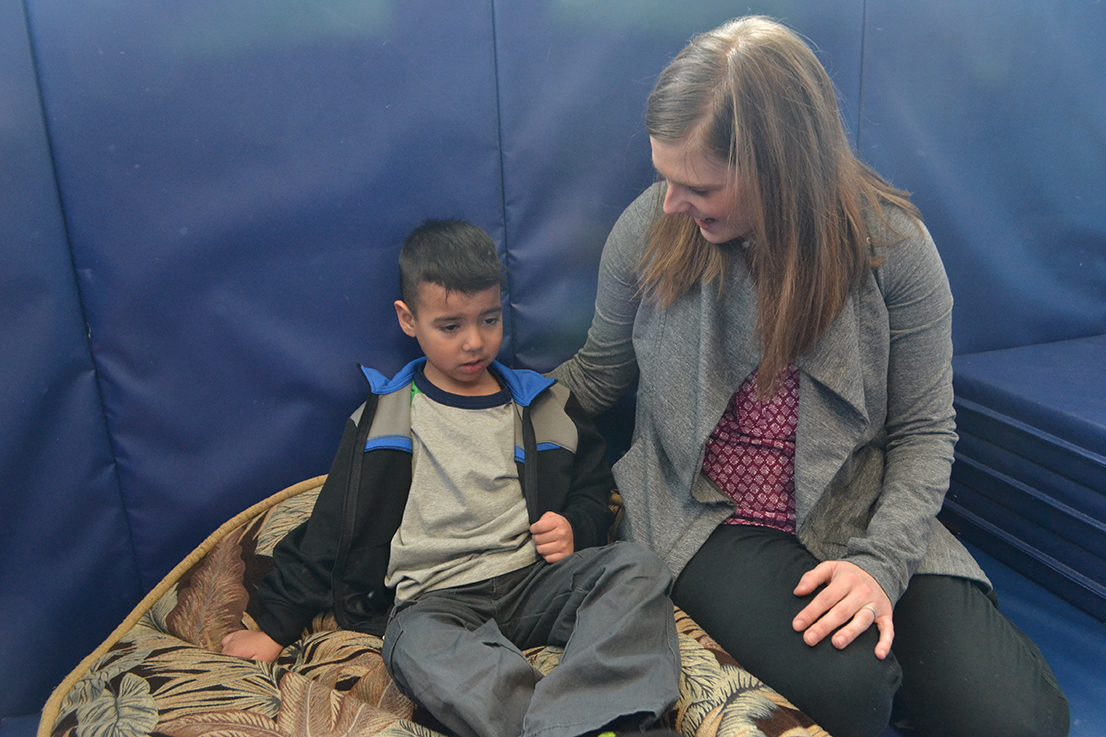
This is the foundation. Young children regulate through connection with adults who model calm, provide comfort, and help them return to a regulated state. Co-regulation is not optional—it is developmentally necessary.
2. Self-Regulation
Over time, with repeated co-regulated experiences, children begin to internalize strategies and regulate more independently. This is a gradual process that unfolds across childhood.
Neurodiverse children often need:
- More time and patience
- More modeling of calm behaviors
- More sensory support
- More predictable routines
- More visual cues
- More emotional language
- More co-regulation
Our therapeutic rotations for kids are designed to meet your child exactly where they are developmentally and help them build these skills step by step.
Signs Your Child May Need Support
Parents often recognize emotional regulation challenges long before a formal diagnosis. Some common signs include:
Sensory-Driven Behaviors
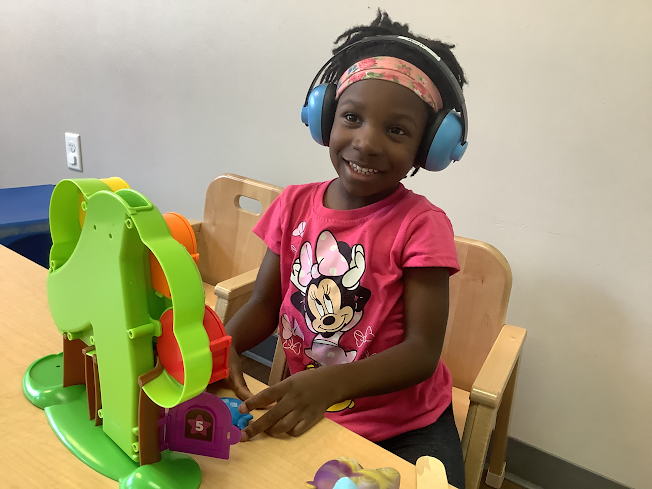
- Covering ears
- Avoiding certain textures
- Meltdowns triggered by noise or unpredictability
- Difficulty with crowded or visually busy environments
Communication-Related Challenges
- Frustration when not understood
- Difficulty expressing needs
- Limited emotional vocabulary
- Reliance on gestures or behaviors instead of words
Social-Emotional Difficulties
- Trouble sharing or taking turns
- Difficulty joining group activities
- Challenges recovering from conflict
- Avoidance of peers
Behavioral Indicators
- Frequent big emotions
- Difficulty calming without adult support
- Rigid routines or resistance to change
- Running away, hiding, or shutting down
These behaviors are not signs of defiance. They are signs of a child who needs support, safety, and connection.
Our Multidisciplinary Approach
What makes Blue Bird Day unique is our integrated therapeutic model. Emotional regulation is supported across disciplines, woven into every daily routine, and reinforced throughout the day. With years of experience, our specialists collaborate seamlessly.
Occupational Therapy (OT)
OT plays a central role in emotional regulation by addressing sensory processing. OTs help children:
- Understand their unique sensory needs
- Use sensory tools to regulate
- Build body awareness
- Develop motor planning for calming strategies
- Participate in sensory-motor activities that support emotional stability
Speech-Language Pathology (SLP)
Communication and emotional regulation are deeply connected. SLPs help children:
- Build an emotional vocabulary
- Request help or breaks effectively
- Use AAC (Augmentative and Alternative Communication) to express feelings
- Understand social cues
- Communicate needs before frustration escalates
Applied Behavior Analysis (ABA)
Our empathetic ABA therapists support emotional regulation by:
- Breaking down complex emotional skills into teachable, bite-sized steps
- Reinforcing positive coping strategies
- Supporting transitions and flexibility
- Teaching replacement behaviors
- Embedding emotional learning naturally into play
Social Work & Mental Health Supports
Social workers help children:
- Identify emotions in themselves and others
- Build lifelong coping strategies
- Practice empathy
- Navigate peer conflict
- Engage in small-group social-emotional learning
Developmental Therapy & Special Education
Teachers and developmental therapists embed emotional regulation into:
- Circle time
- Learning centers
- Daily transitions
- Play and peer interactions
Evidence-Based Emotional Regulation Frameworks
We blend multiple evidence-based models to support emotional development, including:
- Zones of Regulation®: Teaching children to identify their emotional “zone” and choose strategies.
- Social Thinking®: Building perspective-taking and emotional awareness.
- DIR/Floortime-informed co-regulation: Using connection and play to support emotional growth.
- NDBI-based emotional support (ESDM, JASPER): Embedding emotional learning into child-led play.
- Visual supports: Feelings charts, break cards, schedules, and social stories.
- Collaborative Problem Solving (CPS): Teaching flexibility and problem-solving through connection.
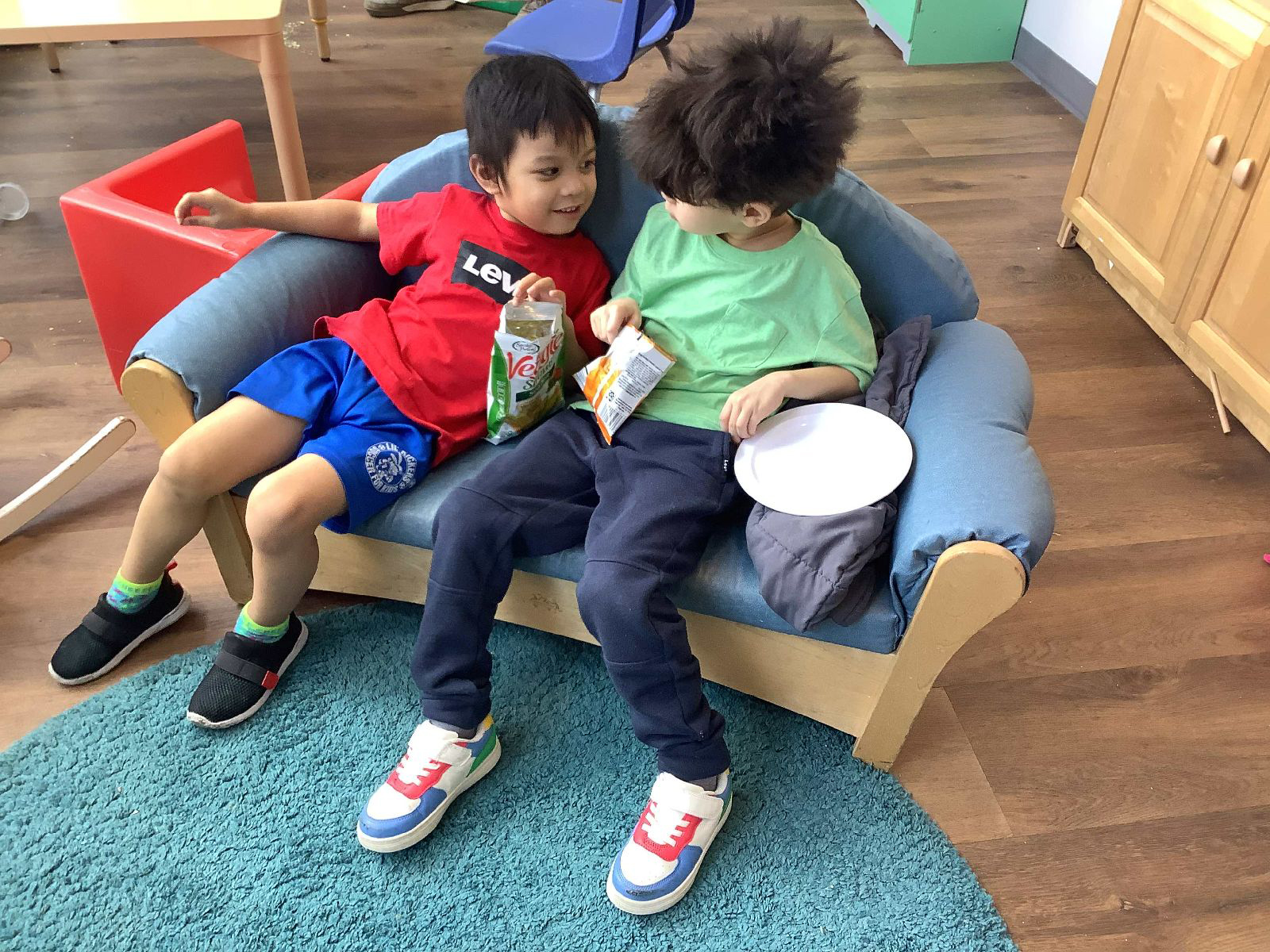
What Emotional Regulation Programming Looks Like
Parents often ask what emotional regulation support looks like in practice. Here are examples from a typical day in our therapeutic preschool and kindergarten for special needs:
- Your child uses a visual “feelings chart” to point to “frustrated,” and a therapist helps them choose a coping strategy.
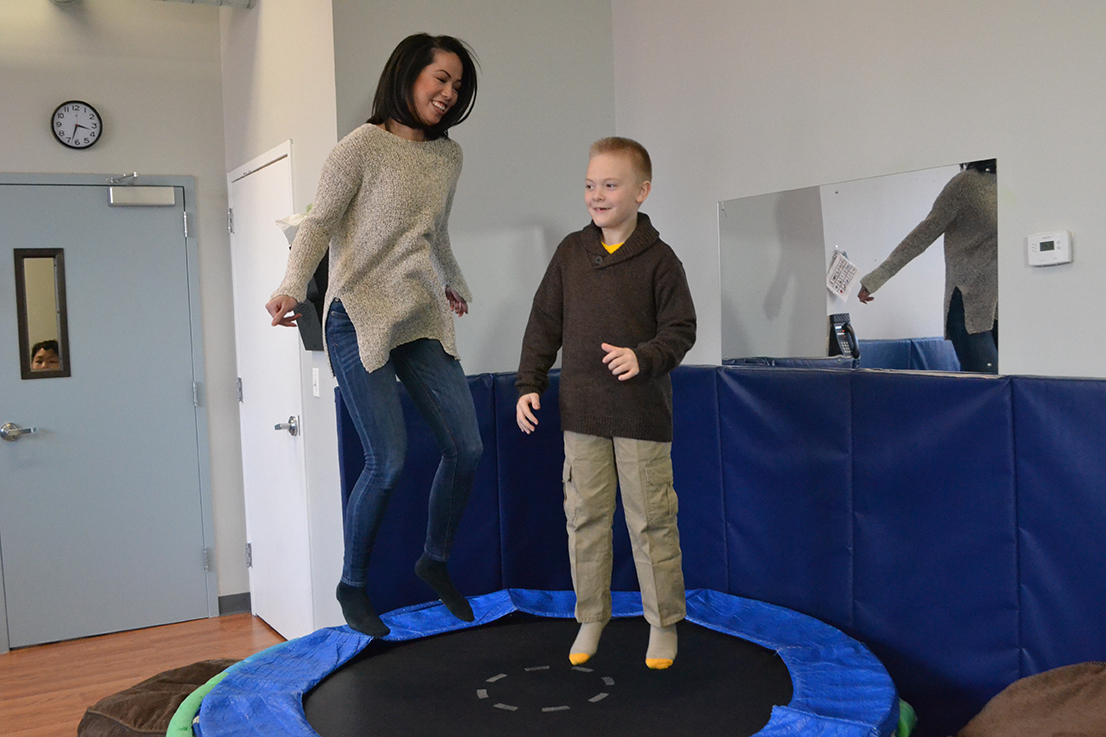
- An OT guides a child through a sensory-motor activity—like swinging or deep-pressure play—to help regulate before group time.
- A speech therapist helps a child use AAC to request a break instead of becoming overwhelmed.
- A classroom utilizes a calm-down corner with sensory tools, visuals, and soft lighting to provide a safe retreat.
Family Involvement: Extending Support Beyond the Classroom
We partner closely with families to support emotional regulation at home. Parent involvement is a cornerstone of our program. It includes:
- Personalized coaching sessions
- Strategies for home routines
- Visual supports customized for home use
- Daily communication through our parent platform
- Collaborative goal-setting
When home and school work together, children make faster, more meaningful progress.
Why Families Choose Blue Bird Day
Families choose Blue Bird Day because they want a comprehensive care team that understands their child deeply. We offer:
- Many years of specialized experience
- A highly trained multidisciplinary team
- Sensory-rich, child-centered environments
- Individualized plans for every child
- Strong, empathetic family partnerships
Blue Bird Day is more than a preschool or kindergarten—it is a community where children feel safe, understood, and empowered to reach their full potential.
Enrollment & Next Steps
If you are seeking a supportive early education option for your child, your next step is to connect with our team. Together, we’ll build a path forward.
- Schedule a personalized tour of our West Loop, Northcenter, or Wheaton clinics
- Meet with our empathetic admissions team
- Learn about our comprehensive evaluation process
- Begin building a personalized plan tailored for your child’s success
To get started, contact us today. Every child deserves to feel safe in their world, and every family deserves a partner they can trust. At Blue Bird Day, emotional growth begins with connection—and grows into confidence, resilience, and joy.
Frequently Asked Questions
1. How do you individualize emotional regulation support for each child?
Every child at Blue Bird Day receives a personalized plan developed by our multidisciplinary team. We start with a thorough assessment of your child’s unique strengths, sensory profile, communication style, and emotional needs. Strategies are then tailored and revisited regularly to ensure continued growth and success.
2. What qualifications do your therapists and teachers have?
Our team includes board-certified therapists in occupational therapy, physical therapy, speech-language pathology, social work, and behavior analysis. All staff have extensive training and experience in early childhood and neurodiversity, and many hold advanced credentials in their specialties.
3. How do you measure progress in emotional regulation?
We use a combination of data collection, observational checklists, work samples, family feedback, and interdisciplinary collaboration to track progress. Our focus is on measurable gains—such as increased use of coping strategies, faster recovery after big feelings, and improved participation in group settings.
4. How can I reinforce what my child learns at Blue Bird Day at home?
Our team partners with you through regular coaching sessions, daily updates, and practical strategies you can use at home. We provide visual supports, routines, and tools that match what your child uses in the classroom, making it easier to create a consistent and supportive environment beyond the school day.

Blue Bird Day—the first therapeutic preschool and kindergarten program in the nation—fosters socialization, sensory regulation, and pre-academic learning in children ages 2-7 years. Our compassionate therapists practice a relationship-based and family-centered approach, provide parent training, and collaborate on goals and individualized intensive treatment plans for your child.
We believe in a collaborative and multi-disciplinary team approach to therapy. A team of occupational therapists, speech-language pathologists, dietitians, developmental therapists, behavioral therapists, physical therapists, and therapeutic assistants are created for each child to ensure child and family are fully supported and the best possible results are achieved.
Options for individualized, group and virtual therapy sessions are available as well.
Want to learn more or you have a specific question? Feel free to connect with us here!